Under India's GST law, not every sale gets billed the same way. A regular taxable sale needs a tax invoice with the tax breakup shown; certain sales instead need a bill of supply, which looks similar but deliberately carries no tax amount. Mixing the two up isn't just a formatting mistake — it can block a customer's input tax credit or create a mismatch when you file returns. Here's the actual rule, and how it plays out when you're the one issuing the document.
What a GST tax invoice is
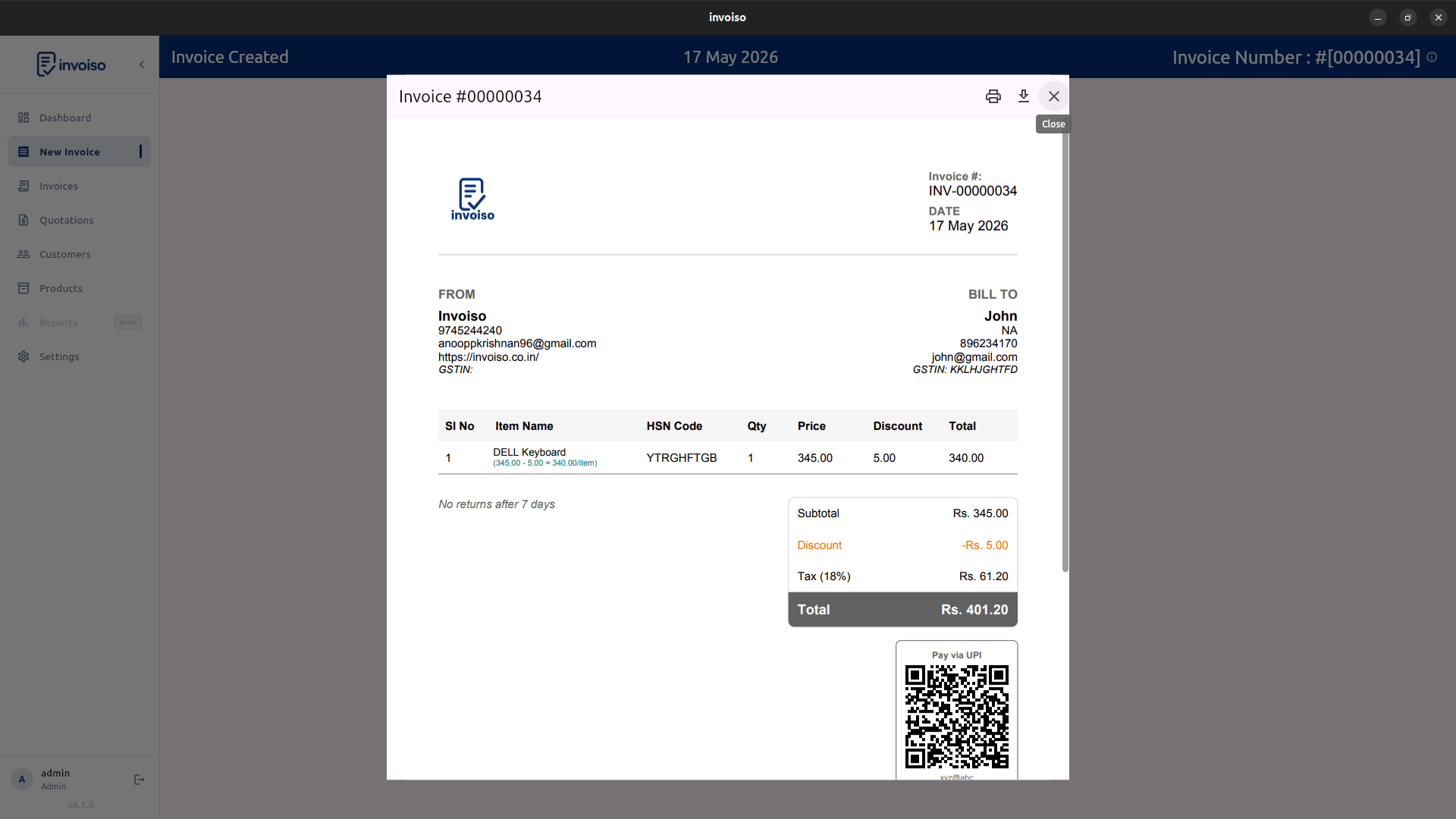
A tax invoice is the standard document a GST-registered business issues for a taxable supply of goods or services, required under Section 31(1) of the CGST Act. It must show the supplier's GSTIN, invoice number and date, customer details, description of goods or services with HSN or SAC code, taxable value, applicable GST rate, and the tax amount split as CGST + SGST for an intra-state sale or IGST for an interstate sale. The customer relies on this document to claim input tax credit, so every required field has to be accurate.
What a bill of supply is
A bill of supply is issued instead of a tax invoice under Section 31(3)(c) of the CGST Act, in two main situations: when the supplier is registered under the GST Composition Scheme, or when the goods or services being sold are exempt from GST. It carries the same basic identifying details — GSTIN, document number, date, customer details, and description of goods or services — but no tax rate or tax amount line, since no GST is being collected on that sale. A composition dealer's bill of supply additionally carries the words "composition taxable person, not eligible to collect tax on supplies."
Who issues which
A regular GST-registered business selling taxable goods or services always issues a tax invoice — this is the default document for the vast majority of B2B and B2C sales. A bill of supply is narrower: it applies to businesses registered under the Composition Scheme for every sale they make, and to any registered business specifically for the portion of sales that are GST-exempt. A single business can issue both documents if it sells a mix of taxable and exempt goods or services — a tax invoice for the taxable line, a bill of supply for the exempt one, never combined on one document.
Why the distinction matters in practice
Charging tax on a bill of supply, or leaving tax off a tax invoice for a taxable sale, both create problems. A composition dealer collecting GST on a bill of supply is charging tax it isn't allowed to collect. A regular dealer omitting tax on what should be a tax invoice denies the customer input tax credit and understates output tax in that period's GST return. Getting the document type right at the point of billing avoids a correction cycle later.
How Invoiso supports both
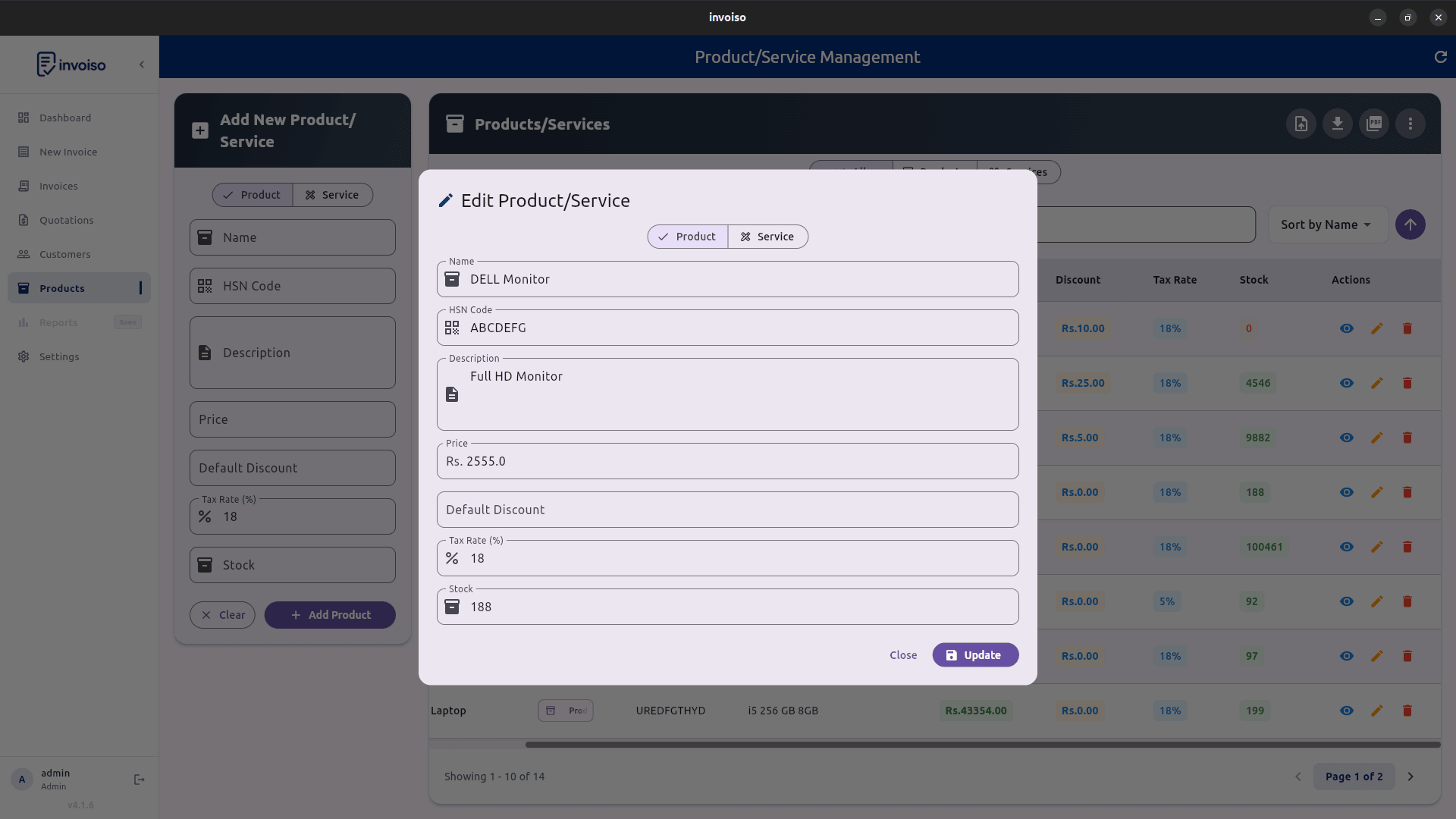
Invoiso generates GST-ready tax invoices with GSTIN, HSN/SAC codes, and automatic CGST/SGST/IGST calculation based on your company's and the customer's state — the standard path for a regular taxable sale. For exempt goods or services, set that product's tax rate to 0% in the product record; the generated invoice then carries no tax breakup line, matching the content a bill of supply requires. Invoiso does not currently ship a separate "Bill of Supply" document label out of the box — if you need the literal heading changed on the PDF for a composition-scheme business, that's a template tweak available through customisation.
Frequently asked questions
Can a composition dealer issue a GST tax invoice?
No. A business under the Composition Scheme cannot collect tax from customers or issue a tax invoice. It must issue a bill of supply, marked "composition taxable person, not eligible to collect tax on supplies."
Does a bill of supply need a GSTIN?
Yes. The issuer's GSTIN is still required on a bill of supply even though no tax amount is charged, since a registered person is issuing it.
What happens if a regular taxpayer wrongly issues a bill of supply for a taxable sale?
The customer can't claim input tax credit, since no tax is shown, and the supplier risks a compliance mismatch when filing GST returns. A taxable sale by a regular dealer needs a tax invoice.
Can one business issue both document types?
Yes. A regular taxpayer selling both taxable and exempt goods or services issues a tax invoice for the taxable sales and a separate bill of supply for the exempt ones.
This article explains invoice document types, not tax law — confirm your specific GST registration status and obligations with your accountant or the GST portal. Invoiso generates GST-ready tax invoices offline; see free GST billing software or download the app.